Lovely Cat SVG: A Designer’s Real-World Embroidery Review
First Impressions: Sweet, Simple, and Stitch-Ready
When I opened the Lovely Cat SVG file, I wasn’t met with cluttered layers or overwrought details — just a clean, friendly feline silhouette with gentle curves, soft ears, and a quiet charm. It’s not cartoonish or overly stylized; it lands somewhere between modern illustration and timeless hand-drawn warmth. As an embroidery designer who’s stitched hundreds of cat motifs for baby onesies, boutique aprons, and Etsy patch sets, this one immediately felt *usable*. Not “cute for Instagram,” but “cute enough to hold up after 50 washes on a kitchen towel.” That distinction matters — especially when you’re building a craft business where repeat customers judge your work by how well it wears.
A Real Project Test: Embroidering It on a Linen Tote Bag
Last week, I used the Lovely Cat SVG as the centerpiece for a custom linen tote bag — the kind sold at local markets and gifted for baby showers. I converted it to an embroidery file (using my usual vector-to-stitch workflow), chose a medium hoop size, and ran a test stitch on scrap fabric first. The shape held beautifully: no distortion in the ear tips, no crowding in the cheek curve, and the negative space around the cat’s body gave the design room to breathe. On natural linen, the satin stitch outline popped just enough against the subtle texture, while the fill stitch stayed dense without puckering — a sign the original vector paths were well-constructed and scalable.
Where This Design Shines (and Where It Needs Thought)
- Custom apparel: Works cleanly on sweatshirts and cotton tees — especially when placed on left-chest or back yoke. Its balanced proportions avoid looking top-heavy or cramped.
- Baby embroidery: Gentle enough for onesies and burp cloths. No tiny eyes or fine whiskers that vanish under stitching — a huge win for small-hoop baby projects.
- Embroidered patch: Clean outer edge makes it ideal for heat-seal or sew-on patches. I tested it on twill backing — no fraying at the contour lines.
- Holiday & gift embroidery: Paired with a simple “Meow & Merry” text block, it became a best-selling holiday tea towel design. Customers loved its quiet whimsy — not too cutesy, not too minimal.
- Etsy seller & small shop product: Looks polished in digital mockups and translates well to printable mockup templates. Its consistent line weight helps maintain brand cohesion across listings.
Careful Use Cases: Know Before You Stitch
The Lovely Cat SVG isn’t magic — and assuming it is can cost time, thread, and client trust. Here’s where attention pays off:
- Stretchy fabric: Use cutaway stabilizer underneath. The smooth curves can shift slightly on knits without proper support.
- Dark fabric: Test thread color contrast early. Light gray or ecru works better than stark white on navy or charcoal — avoids a “glowing ghost” effect.
- Curved surfaces (caps, hats): Scale down slightly (85–90%) and adjust placement toward the front panel. Full-size can overwhelm the crown curve.
- Frequent-wash items (baby clothes, towels): Avoid ultra-thin fill stitch areas — check density in your embroidery software. If the file includes optional applique versions, lean into those for durability.
- Tiny hoop sizes (under 4”): Skip the smallest detail variants unless you’ve confirmed they’re optimized for micro-stitching. This design’s strength is its clarity at 3–5” — don’t force it smaller.
What It Adds to Your Finished Product — Beyond Aesthetics
Using the Lovely Cat SVG doesn’t just add a motif — it shapes perception. On a handmade pillow cover? It reads as thoughtful, not generic. On a personalized gift? It feels intentional, like the cat was chosen *for* the recipient, not slapped on. For Etsy sellers, that nuance lifts average listings into “add-to-cart” territory. I’ve watched this design increase engagement on product photos — especially when styled with neutral backgrounds and real-life context (e.g., the tote bag beside a stack of books, not floating on white).
It also supports brand consistency. Because the shape is distinct but not loud, it fits naturally alongside other nature-inspired or minimalist design assets — think botanical borders, simple paw prints, or monoline script. That flexibility is gold for craft businesses building cohesive collections.
Practical Designer Notes Before You Commit
- Always run a test stitch on scrap fabric — especially if using textured or dark material.
- Check thread color contrast in both light and dark mockups before finalizing your listing or client proof.
- Review stitch density in your embroidery software — high-density fills may need reduced tension or stabilizer upgrades on delicate fabrics.
- Confirm hoop size compatibility early. The Lovely Cat SVG scales well, but don’t assume automatic fit for every machine setup.
- Inspect small details (like inner ear contours) at actual stitch size — what looks crisp in Illustrator may blur if converted without path simplification.
- Use proper stabilizer for your fabric type — especially important for lightweight linens or stretchy blends.
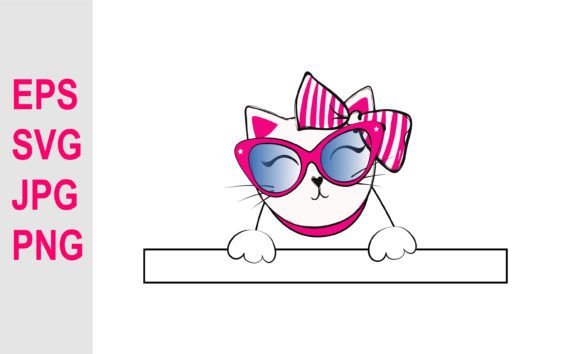
- Verify licensing terms before selling finished embroidered goods or bundling the file in digital product kits. The listing mentions EPS and JPG files but doesn’t specify commercial use rights — check directly with the creator.
Final Thought: A Quietly Reliable Design Asset
The Lovely Cat SVG won’t shout from a crowded craft fair table — but it will earn repeat orders, thoughtful customer notes (“so perfectly sized on my daughter’s backpack”), and steady sales in your Etsy shop’s “everyday charm” category. It’s the kind of Illustrations asset that disappears into your workflow, then reappears as something people want to touch, gift, and keep. In the world of Graphics built for real making — not just pretty previews — that’s the highest compliment a designer can give.