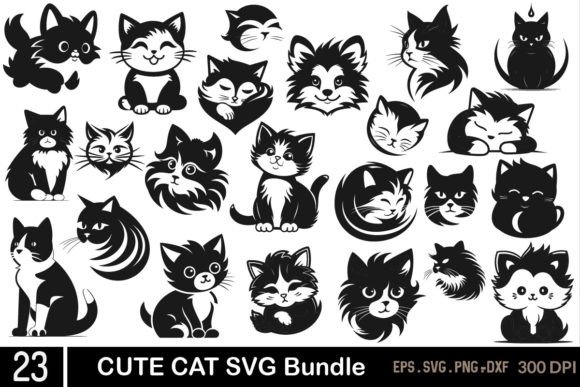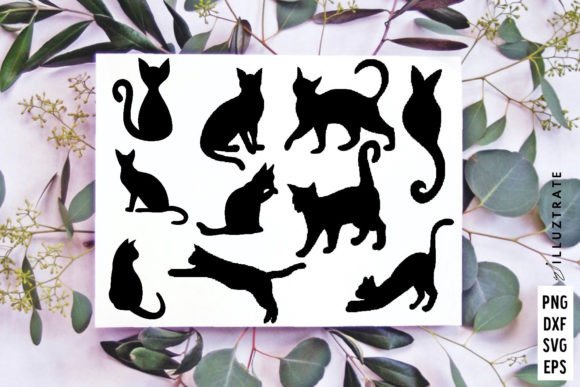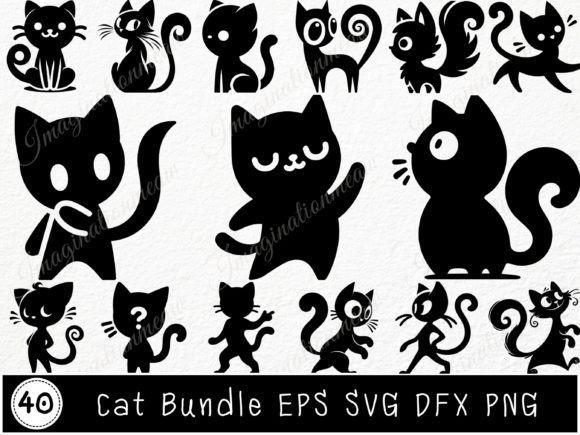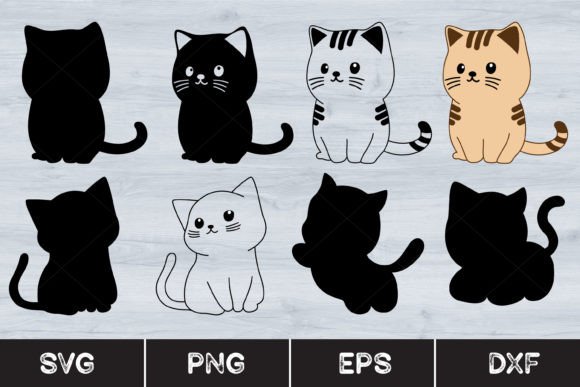
Cat Silhouette Pack, Cute Cat, SVG
As a designer who’s stitched over 300 client projects—from boutique baby onesies to Etsy best-selling tote bags—I opened Cat Silhouette Pack, Cute Cat, SVG expecting charm. What I found was something quieter but more versatile: clean, confident silhouettes that breathe space instead of crowding the fabric. No frills, no clutter—just cats with gentle curves, subtle ear angles, and a soft, approachable posture. It’s not “cute” in a saccharine way; it’s warm, intentional, and quietly expressive—perfect for makers who want personality without visual noise.
Last week, I prepped a custom order: embroidered linen tea towels for a local kitchen shop’s spring collection. Their customers love handmade texture but hate stiff, over-stitched designs. So I pulled Cat Silhouette Pack, Cute Cat, SVG into my digitizing software—not to edit, but to assess how its simplicity would translate when stitched. The first thing that stood out? Its natural fit for satin-stitch outlines or light fill-stitch rendering. There’s no dense interior detail demanding heavy stitch density, which means less puckering on lightweight linens and better drape on curved surfaces like apron pockets or cap brims.
This isn’t a design built for maximalist sweatshirt embroidery—no bold shadows, no layered fur textures, no tiny whiskers begging for micro-stitching. Instead, it shines where subtlety wins: baby onesies (especially on pale organic cotton), minimalist pillow covers, delicate nursery wall hangings, and small-batch embroidered patches for denim jackets. I tested one silhouette as a 2.8" applique on a chambray tote—paired with a single-layer tear-away stabilizer—and the result felt handmade, not machine-made: clean edges, balanced weight, and zero thread nesting at the ears or tail tip.
That said, Cat Silhouette Pack, Cute Cat, SVG demands thoughtful placement. On stretchy fabrics like jersey or ribbed knit, you’ll need cutaway stabilizer and possibly reduced stitch speed—those smooth curves tighten under tension, and even slight distortion blurs the cat’s gentle profile. On dark fabric, avoid light thread unless you’re adding a white underlay; the shapes rely on contrast to read clearly. And if you’re stitching on curved caps or baby hats, test hoop size early—the largest silhouette runs about 3.5" wide, so anything smaller than a 4" hoop will require repositioning or scaling down (which risks losing definition in the ear contours).
I also ran it through a few real commercial checks. As an Etsy seller myself, I know buyers scroll fast—but pause for authenticity. This pack feels cohesive enough to build a brand around: imagine a set of three sizes (small, medium, large) used across matching tea towels, oven mitts, and dishcloths. The consistent line weight and proportional balance make it easy to scale without losing character. That consistency builds trust—not just in your shop, but in the finished product. A customer receiving a hand-embroidered cat pillow cover from your small shop doesn’t just see a cat; they feel intention, care, and quiet craftsmanship.
Where it falls short is in high-detail contexts. Don’t use it for tiny monogrammed pet tags (too large a footprint), intricate holiday ornaments with metallic threads (no built-in metallic-ready paths), or layered applique where you’d need precise seam allowances. It’s not an applique design out of the box—it’s a graphic foundation. You’ll need to digitize your own underlay or backing if you’re building multi-step embroidery files. And while the included SVG, transparent PNG, EPS10, and DXF formats give flexibility for vector editing or mockup work, remember: none of those are native embroidery files. You’ll still need to convert and digitize for actual machine embroidery design use—so confirm your software supports importing and tracing these formats before committing to a production run.
Here’s what I do every time I evaluate a new digital embroidery file like Cat Silhouette Pack, Cute Cat, SVG:
- Test on scrap fabric first—especially if using textured weaves or blends;
- Check thread color contrast on both light and dark backgrounds using a simple black-and-white mockup;
- Review stitch density in your digitizing software—look for tight corners or overlapping paths that could cause thread breaks;
- Confirm hoop size compatibility before laying out multiple cats on a single garment;
- Inspect small details like ear tips and tail ends—they’re the first to blur if stabilizer or tension isn’t dialed in;
- Use proper stabilizer based on fabric weight—not just type, but layer count;
- Verify licensing before selling finished items or bundling the files as part of your own digital product offerings.
For craft business owners, this pack works best as a quiet anchor—not a headline. Pair it with neutral thread palettes (oatmeal, slate, charcoal, warm ivory) and let the shape speak. It elevates a plain kitchen towel into a boutique-ready piece. It gives a baby blanket gentle identity without overwhelming delicate stitching. And for holiday embroidery, it reads instantly as cozy, nostalgic, and handmade—no glitter, no bells, just warmth.
If you’re an apparel decorator adding custom cat motifs to sweatshirts for a local cat café, or an Etsy seller curating a “slow craft” collection, Cat Silhouette Pack, Cute Cat, SVG won’t shout—but it will hold attention. Its strength is in restraint: no visual competition with fabric texture, no stitch overload on thin cotton, no risk of muddying fine details during washing. That translates directly to product value—fewer returns, higher repeat orders, and stronger brand recognition over time.
Bottom line? This isn’t flashy Illustrations or trendy Graphics—it’s thoughtful design assets built for longevity, not virality. Use it where clarity matters more than complexity. Where your customer values the quiet confidence of a well-placed silhouette over a busy motif. Where handmade product meets real-world wear, wash, and display. And where, after hundreds of stitches, the cat still looks like a cat—not a compromise.